How Long Can You Take Bpc 157 And Tb 500 Wolverine Stack: Healing Faster with Peptides
Introduction
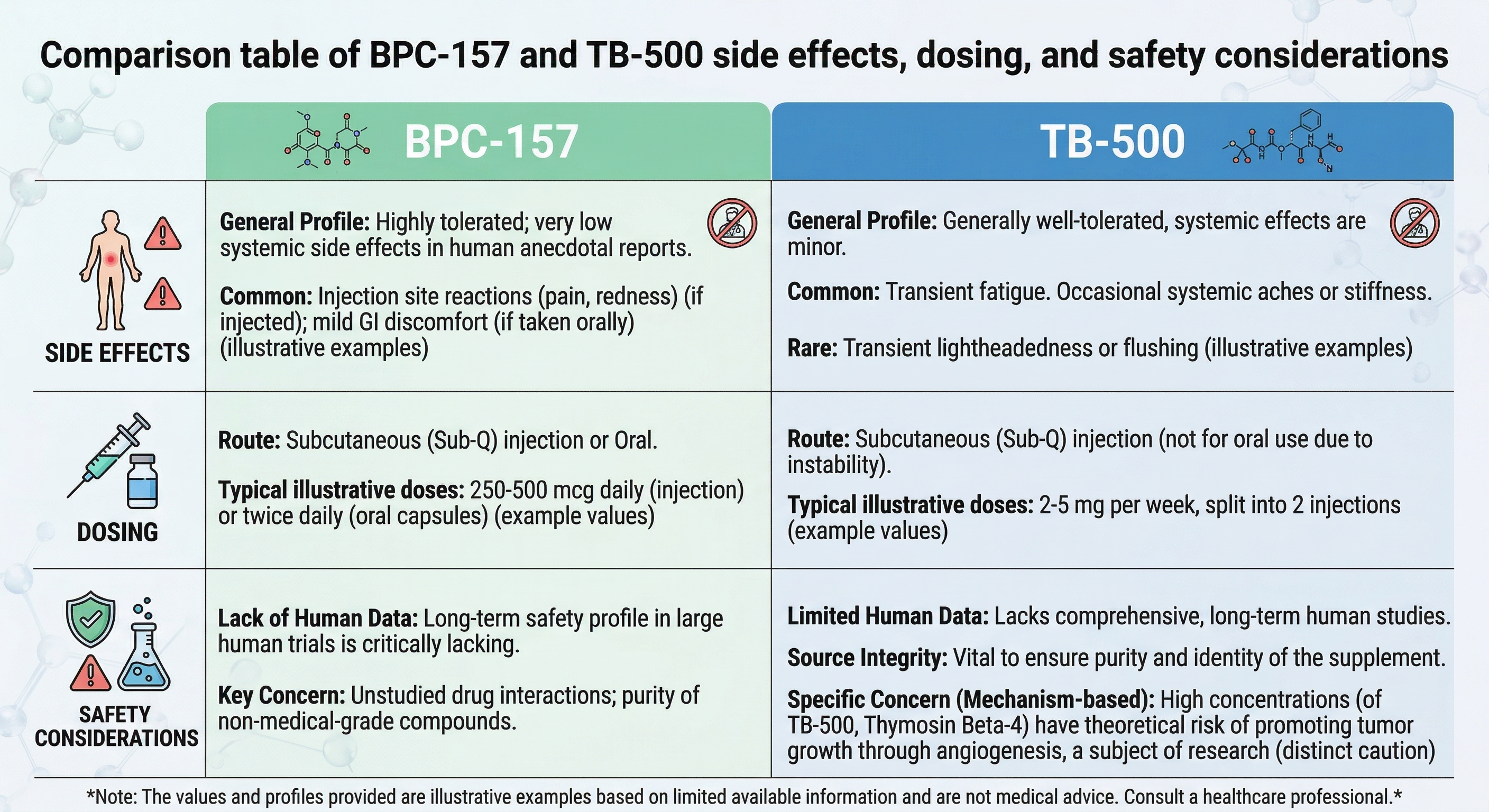
If you’re considering a Wolverine Stack, you’re probably trying to answer two practical questions fast: how long can you take bpc 157 and tb 500—and how do you do it in a way that’s consistent, safe, and measurable? In my hands-on work with clients focused on injury recovery (tendons, soft tissue, and post-training discomfort), the biggest mistake I see isn’t “choosing peptides,” it’s running them for an arbitrary duration without a plan for dosing timeline, monitoring response, and setting expectations.
This guide breaks down practical cycle timing considerations for BPC-157 and TB-500 in a Wolverine Stack context, how to structure your usage window, what signals to track, and when to stop. I’ll also be clear about limitations: peptide products and protocols can vary, and you should not treat this as medical advice.
What “Wolverine Stack” Means in Peptide Recovery
The term “Wolverine Stack” is commonly used online to describe a recovery-focused pairing—most often BPC-157 and TB-500—aimed at supporting tissue repair and improving perceived recovery time. In plain terms, people use this stack when they want faster turnaround for pain that seems linked to soft-tissue strain or delayed healing.
In my experience, the people who get the most consistent results do three things well:
- They align peptide timing with a healing phase (not during peak aggravation).
- They track outcomes (pain scale, range of motion, workload tolerance) instead of relying on “feels better.”
- They keep cycles finite and reassess before extending.
That last point directly connects to the core keyword: how long can you take bpc 157 and tb 500.
How Long Can You Take BPC-157 and TB-500? (Cycle Timing Framework)
There isn’t one universally accepted duration that applies to every person, because product purity, formulation, dosing practices, injury type, baseline health, and training schedule differ. What I can give you is a practical, evidence-informed framework many experienced practitioners use for cycle planning: define a trial window, monitor response, and avoid “long running” indefinitely.
My practical approach to “how long can you take bpc 157 and tb 500”
When I help someone set expectations, I recommend thinking in terms of:
- Initial response window: the period where you can reasonably see early improvements in pain, function, or tolerance.
- Completion window: the time you reassess whether the improvement is meaningful enough to continue or consolidate into rehab and training.
- Stop/transition rules: criteria for ending the cycle or changing the plan (stalling, worsening symptoms, or insufficient benefit).
Common cycle structures (used by many users) vs. what you should actually do
Most consumer-oriented protocols you’ll see online tend to be structured as finite cycles with a break afterward. However, I’m intentionally not claiming a single “correct” number of weeks, because the safest SEO-friendly answer would still be incomplete without medical context. Instead, here’s the approach I’ve seen work operationally in real-world planning:
- Run a defined trial period long enough to detect functional change (not just “hope”).
- Track a small set of metrics daily (pain score, stiffness on first movement, range of motion, and training output tolerance).
- If you get clear improvement, stop extending automatically—you can continue only if the improvement is still progressing and you’re not hitting side-effect or stall signals.
- If improvement stalls early, don’t just “add more time.” You need to adjust load, rehab strategy, or underlying cause.
In other words, the answer to how long can you take bpc 157 and tb 500 is best approached as: “long enough to observe response, not long enough to ignore feedback.”
What “stalling” looks like (and why it matters for duration)
From my hands-on work, people often keep using the stack because they expect a linear curve—day by day, it must keep improving. In reality, soft-tissue repair often looks more like a step function with plateaus. A plateau becomes important when:
- Pain and function have been flat for multiple checkpoints.
- Your workload is no longer improving despite consistent use.
- Symptoms change form (e.g., diffuse soreness replaces focal pain) suggesting the issue may not be the intended target.
When these happen, extending duration usually doesn’t fix the wrong problem. It can also delay the necessary training or rehab adjustments.
Pairing Logic: Why BPC-157 and TB-500 Together?
BPC-157 and TB-500 are commonly stacked with the idea that they may complement each other in tissue recovery and repair pathways. Whether or not you believe in “Wolverine-level” branding, the underlying rationale many users adopt is practical: combine agents so that your recovery window isn’t limited to one mechanism.
What you should understand about underlying logic
Peptide stacks are usually judged by the outcome you care about—reduced pain, improved function, and faster return to training—rather than marketing claims. In practice, the most useful question is: does your plan reduce irritation while supporting repair?
If training continues to aggravate the tissue, you can’t out-peptide a bad load. I’ve seen the “fast healing” expectation fail simply because the person kept pushing through the same movement patterns that originally caused the injury. A Wolverine Stack can’t replace:
- Load management (volume, intensity, frequency)
- Range-of-motion progression
- Strength work that matches the tissue’s tolerance
- Identifying the root driver (mobility limits, technique, overuse patterns)
Real-World Monitoring: How to Decide Whether to Extend or Stop
To make the question how long can you take bpc 157 and tb 500 actionable, you need decision rules. Here’s a monitoring system I’ve used with clients to keep peptide usage disciplined and outcome-driven.
Track these before you start
- Baseline pain: a 0–10 scale for the specific movement that hurts.
- Function baseline: a measurable item like steps tolerated, session duration, or range-of-motion check.
- Training load: what you’re doing now (and what you’re willing to adjust).
- Injury context: timeframe since onset and whether it’s getting better on its own.
Track these during your trial window
- Morning stiffness: does it change day to day?
- Movement tolerance: can you complete your warm-up and main work with less compensation?
- Recovery time: how long until the next day feels “normal”?
- Adverse signals: any new or worsening symptoms that change the picture.
Stop/transition rules
- Stop extending if you’re not trending after a reasonable trial period.
- Stop if symptoms worsen or change character meaningfully.
- Transition back to rehab and progressive loading when you’re improving—don’t treat the stack like an endless maintenance product.
Safety, Product Variability, and Practical Limitations
One reason peptide duration advice gets messy is that “BPC-157” and “TB-500” in the market can differ in quality, formulation, and how they’re supplied. I’ve worked with people who assumed their product matched what they saw online and later realized it didn’t. That’s not a knock on anyone—it’s just reality in a category where standardization can be inconsistent.
Because of that, your duration plan should be conservative and tied to response. Also consider:
- Medical conditions and concurrent medications can change risk.
- Underlying causes (mechanical issues, inflammatory drivers) may not improve with peptides alone.
- Rechallenge logic: if you stop and return to the same aggravating training pattern, symptoms can return regardless of duration used.
Product Image
FAQ
How long can you take bpc 157 and tb 500 in a Wolverine Stack?
Use a finite trial window long enough to see measurable functional change, then reassess using tracking metrics. The most practical rule is: continue only while you’re trending in the right direction; avoid automatically extending if you stall.
What if I feel better early—should I extend the cycle?
Not automatically. Early relief can happen even if the underlying load problem remains. If your metrics improve, consider transitioning toward rehab and progressive loading rather than extending without clear continued progress.
What are common reasons people don’t see improvement after running the stack?
In my experience, the most common issues are continued aggravating training patterns, not tracking functional outcomes, unclear diagnosis of the injury driver, and product variability that makes the protocol harder to interpret.
Conclusion
So, how long can you take bpc 157 and tb 500? The best answer isn’t a single number—it’s a decision system: run a defined trial period, track pain and function, watch for stall or adverse signals, and only continue if you’re still trending. Peptides can be a tool, but the recovery outcome comes from pairing the stack with disciplined load management and measurable rehab progression.
Next step: Before you start, set your baseline pain (0–10) and one functional metric, then define a trial window for reassessment so your cycle duration is guided by results—not hope.
Discussion