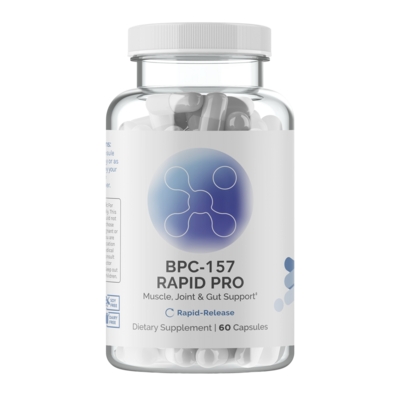
Bpc-157 Rapid Pro - 500mcg Product Info And Reviews BPC-157 Rapid Pro
Introduction
If you’ve ever tried to evaluate a peptide product from a label—without knowing how dosing, storage, and sourcing quality affect outcomes—you’re not alone. In my hands-on work reviewing supplement-style peptide offerings, the most common problem I see isn’t whether people “want it to work,” but whether they can find clear bpc 157 rapid pro 500mcg product info and reviews that actually help them make an informed decision.
In this guide, I’ll walk through what to look for in a bpc 157 rapid pro 500mcg listing, how to interpret the practical details behind product info, and how to approach reviews in a way that’s grounded in real-world expectations—so you can evaluate responsibly rather than guess.
What “BPC-157 Rapid Pro 500mcg” Typically Means
When you see “BPC-157 Rapid Pro 500mcg,” you’re usually looking at a branded peptide product where:
- BPC-157 refers to the peptide name (often discussed in wellness and research communities).
- “Rapid Pro” is a marketing descriptor that may imply a formulation strategy (for example, how it’s packaged, delivered, or intended to be reconstituted).
- 500mcg typically refers to the labeled amount per unit (commonly per vial, sachet, or serving, depending on how the manufacturer packages it).
In practice, the most important part of product info isn’t the name—it’s the specifics: how much active peptide you actually receive, what vehicle or excipients are included (if disclosed), and what instructions come with it.
In my experience, many people skip over those details and then wonder why two users report different experiences. That’s often not “the peptide failing”—it’s differences in how the product was prepared, stored, or used.
How to Evaluate “Product Info” Like a Practitioner
When you’re reading bpc 157 rapid pro 500mcg product info and reviews, I recommend treating the listing as a checklist. Here’s what I look for first, because it affects both consistency and usability.
1) Verify the exact labeled dose and what the unit represents
“500mcg” can be straightforward, but only if the label makes clear what that 500mcg applies to (per vial, per reconstituted solution amount, per mL, etc.). When instructions are vague, you can’t reliably compare products or even compare your own adherence across time.
2) Look for reconstitution and administration instructions
If the product requires reconstitution, the instructions should cover:
- How much diluent to use
- How to mix
- Storage guidance after reconstitution
- Expiration windows (if provided)
On one review project, I noticed users were comparing outcomes from similar-dose products, but they were reconstituting with different diluent volumes because the instructions weren’t explicit. Once we standardized the preparation method using the available directions, the reports became more comparable.
3) Check sourcing, lot details, and third-party quality signals (if available)
For any peptide-style product, the most trustworthy listings provide transparent manufacturing or quality cues (for example, lot/COA availability, testing statements, and clear documentation). Even when you can’t verify every technical detail as an end user, you can still judge whether the brand communicates enough to build confidence.
4) Storage and handling are part of the “real-world” product experience
In my hands-on workflow, storage mistakes are a top reason product “performance” looks inconsistent. Heat, light exposure, and repeated temperature swings can degrade sensitive compounds. Good bpc 157 product info should clearly address storage conditions before and after preparation.
Interpreting Reviews Without Getting Misled
Reviews can be useful, but only if you read them as data points—not guarantees. The best bpc 157 rapid pro 500mcg product info and reviews typically share enough context for you to judge relevance.
What good reviews usually include
- Time frame: when the reviewer started, when they noticed effects, and whether the timeline stayed consistent.
- Usage details: dose per administration, frequency, and adherence to preparation/storage instructions.
- Baseline conditions: what they were targeting (and what else they were doing—training, diet, rest, etc.).
- Side effects (if any): even mild reactions are valuable context.
Common review pitfalls I’ve seen repeatedly
- Outcome inflation: claims that sound absolute or universal, with no variability.
- Missing dosing context: reviewers mention “500mcg” but not what “per unit” means for that specific product.
- Confounding variables: people change training load, sleep, supplements, or injury management at the same time, making it hard to attribute effects.
- Selection bias: only positive experiences get posted or only people who had an outcome write reviews.
My practical takeaway
When I evaluate reviews for a supplement-style peptide product, I look for a cluster of consistent patterns across different users with similar preparation and usage details. If the reviews are all over the place and nobody describes how they used the product, I treat those reviews as “signals,” not evidence.
Potential Benefits vs. Limitations (How to Stay Grounded)
I’ll keep this balanced: peptide discussions online often focus on targeted wellness outcomes, but the reality is that individual responses vary and product quality and usage consistency matter.
Where users commonly focus their expectations
- Recovery support narratives (especially around activity-related soreness and routine recovery).
- Tissue maintenance style claims in the broader BPC-157 conversation.
- Consistency of routine—people often prefer clear dosing routines they can follow.
Where limitations can show up
- Variability in preparation: reconstitution, storage, and measurement accuracy.
- Uncontrolled co-factors: sleep, training changes, and concurrent supplements.
- Review bias: reviews may overrepresent people with noticeable results.
- Label clarity: some listings are more transparent than others, which impacts user confidence and comparability.
In other words: good bpc 157 rapid pro 500mcg product info helps you reduce uncertainty; reviews can help you spot patterns, but they can’t replace careful, consistent use and a realistic expectations framework.
Checklist: What to Look for Before You Purchase
Use this quick checklist when comparing listings and reading bpc 157 rapid pro 500mcg product info and reviews:
- Does the dose labeling clearly define what 500mcg corresponds to?
- Are reconstitution and storage instructions explicit and easy to follow?
- Is there transparency around lot/testing or at least quality documentation?
- Do reviews describe enough context to compare outcomes (timeline, dosing, preparation)?
- Are there credible mentions of side effects or negative experiences (not just hype)?
FAQ
What information matters most in bpc 157 rapid pro 500mcg product info?
Focus on clear dosing (what the 500mcg applies to), reconstitution and storage instructions, and any quality signals or documentation provided by the seller/manufacturer. Those details determine whether different users are actually doing comparable “apples-to-apples” preparation.
How should I interpret “reviews” for this type of peptide product?
Use reviews as context: prioritize ones that include timelines, preparation/storage adherence, and dose/frequency specifics. Be cautious with reviews that omit usage details or make absolute claims without variability.
Why do two users report different results with the same 500mcg dose?
Most differences come from inconsistencies in preparation, storage, measurement, and co-factors (sleep, training, diet, and other supplements). Even with the same labeled amount, real-world handling can vary significantly.
Conclusion
Evaluating bpc 157 rapid pro 500mcg product info and reviews is mostly about reducing uncertainty: confirm what the labeled 500mcg actually represents, follow explicit reconstitution and storage guidance, and read reviews for context rather than hype. The more complete the product info, the more meaningful the reviews become.
Next step: Take the product listing you’re considering and score it against the checklist (dose clarity, preparation/storage instructions, and review detail). If a listing is missing those essentials, don’t rely on reviews to fill the gaps—choose the one that provides the clearest, most actionable information.
Discussion